

The Journal
Highland Park, Orkney: the house after the Viking years
28 AUGUST 2026
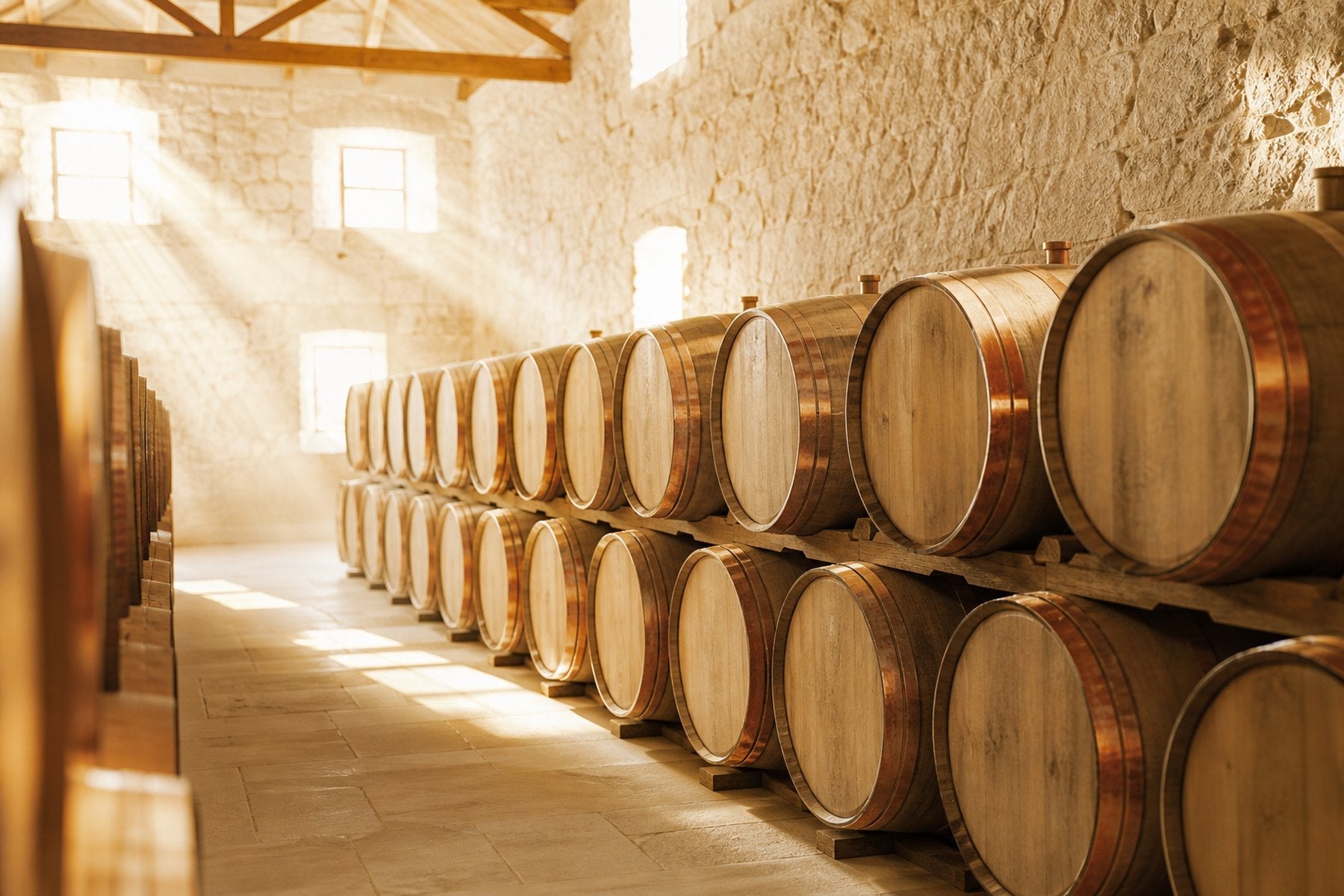
For about a decade the bottles looked like they had been designed in a saga. Helmets, runes, gods with unpronounceable names. Underneath all of that, Highland Park was still doing the same three things it had done on High Park above Kirkwall for a very long time: turning a share of its own malt, smoking it over local peat, and filling sherry-seasoned casks. Collectors who stayed with the house through those years were not buying the costume. They were buying the malt.
A place called High Park
The name is not a flourish. The distillery stands on Holm Road, on the southern edge of Kirkwall, on a rise the island has always called High Park. In the way collectors talk, this is an Island malt: Orkney, off the Speyside map, maritime without being Islay. The law is fussier. The Scotch Whisky Regulations 2009 put the distillery inside Highland, and the Scotch Whisky Association is clear that "Islands" is not a protected place-name you can add to a label. Orkney, as a locality, you can. The trade has never much cared. Scotchwhisky.com still files Highland Park with the Islands, and so does everyone who actually drinks it.
The gate says 1798. That is the date the house repeats, and the date attached to Magnus Eunson, the church officer who is supposed to have been caught distilling on the site. The official story now calls him Mansie, a beadle who hid bottles under his pulpit and later took a licence. Jason Craig, then the brand director, put it more plainly in 2017: 1798 is the year the authorities finally caught up with Magnus, who had been making whisky for some time before that. Scotchwhisky.com treats the founding as contested (Eunson, or a farmer called David Robertson) and puts the legal licence later, in 1826, under Robert Borwick, three years after the Excise Act. What you can still walk around are the early nineteenth-century stone buildings and the two pagoda kilns.
James Grant, who had managed Glenlivet, took full control in 1895 and by 1898 had stretched the plant to four stills, two wash and two spirit. That footprint is still there. Highland Distillers bought the distillery in 1937. Edrington bought Highland Distillers in 1999 and with it Highland Park and The Macallan. For most of the twentieth century the malt went into blends, a valued top dressing rather than a bottle with its own name. It only appeared as a single malt in the late 1970s, first as an eight-year-old. The 12 became the regular bottle, the 18 followed, and for a generation that pair is what people meant when they said Highland Park. Not Thor. Not Odin. The 12 and the 18.
A visitor centre opened in 1986. Annual capacity is widely put at about 2.5 million litres, modest next to the Speyside plants that share Edrington's address book, and Scapa sits half a mile down the hill. For years the house was sold as Scotland's most northerly whisky distillery. Shetland has since taken that line, and Undiscovered Scotland now calls Highland Park the most northerly large one. The brand has stopped leaning on the claim, which is just as well. Latitude was never why anyone kept a bottle of the 18.
A fifth of the malt, and the peat that goes with it
Floor maltings are rare, and they are easy to oversell. Springbank in Campbeltown malts every grain it uses on site. Highland Park does not, and the distinction matters if you are going to talk about craft with a straight face. The Edinburgh Whisky Academy, in a 2025 survey of the remaining floors, puts Highland Park's share at around 20 per cent. Scotchwhisky.com says the heavily smoky malt from the distillery's own kiln makes up 20 per cent of each mash, with the rest (unpeated) coming from the mainland. In 2017 The Spirits Business, quoting the brand, said the same thing: the floors supply one fifth of needs. That is the accurate comparison. It is still uncommon.
The peat is local. Hobbister Moor, a few miles from Kirkwall, is the source the house names, and official copy calls Highland Park the only distillery using Orkney heathered peat. Scotchwhisky.com is plainer and more useful. Orcadian peat is sphagnum moss and heather, not the woody mainland cut and not Islay's marine one, and the smoke is meant to sit behind the malt rather than in front of it. Secondary write-ups disagree about phenol numbers, which is a good reason to leave them alone.
Craig also said the distillery had tried cheaper peated malt from the mainland, even from nearby Sutherland, and that the whisky was not the same. "Great whiskies are not made on a spreadsheet" is the sort of line brands pay for. The production fact underneath it is simpler, and harder to argue with. A portion of the barley is still turned on Orkney floors and dried over Hobbister peat in kilns the house has no plan to replace.
Sherry is the other half of the style. Scotchwhisky.com records a 100 per cent sherry-cask regime from 2004, European and American oak, plus refill, and that is the core policy collectors mean when they talk about Highland Park wood. It is not an absolute for every special. Gordon Motion's 2025 farewell, Sherry Skies, was six sherry-seasoned casks from Jerez and three bourbon casks. Cask Strength: Heather, in January 2026, went back to first-fill European and American sherry-seasoned oak, with some refill. The 12, 15 and 18 remain sherry-led. The 18 is still the bottle people point to when they want the house without a story attached.
What collectors actually kept
The Valhalla Collection started in 2012 with Thor, Loki, Freya and Odin. Valkyrie followed in 2017, along with a packaging overhaul and a Magnus bottling for the United States and Canada. Craig told The Spirits Business that Orkney's Norse past was the emotion he thought the liquid lacked on a shelf, and that he may have got carried away in "the teenage rebellion years." Michael Jackson had already called Highland Park the greatest all-rounder among malts. Craig disliked the phrase because it sounded like a player with no position. Collectors, by and large, sided with Jackson and ignored the helmet.
What actually moved were age statements, older official vintages, and independent bottlings. Scotchwhisky.com describes a strong, even cult, following that grew up around the 12- and 18-year-old years. Independent bottlers have taken Highland Park for decades, and the interesting bottles are still the ones with a distillation year and a cask type written on them. The secondary standing is real and long-running. It does not need invented hammer prices.
Gordon Motion joined Edrington in 1998 and later concentrated on Highland Park. He widened the official range to 21, 30 and 40 year olds, ran a cask-strength series, and selected hundreds of single casks. In 2008, in his first year as master whisky maker, he pulled ten 1968 refill casks and put them into first-fill European sherry butts. That parcel became the 54-year-old of February 2023 (225 bottles, recommended £39,000, for the distillery's 225th year) and the 56-year-old of January 2025 (170 bottles, recommended £40,000), which the house still calls its oldest release. Those are published retail figures at launch, not auction results. Motion's note on the 56 was the useful one. Even at that age the heathered peat still showed, without the woodiness he would otherwise have expected.
A change of clothes, and a change of maker
In April 2025 the brand dropped the runes. The Spirits Business reported a new identity and a campaign called "different by nature," shot in Orkney with local people rather than Norse theatre. Packaging for the 12, 15 and 18, and for travel retail, shifted toward heather, a wood-grain nod to sherry casks, and the words "Product of Orkney" cut into the glass. D8, the design studio, said the brief was to move from a Viking-inspired whisky to a place. Collectors had already made that move.
Motion retired at the end of July 2025 after 27 years. Marc Watson, who had been master blender for The Famous Grouse and Naked Malt inside Edrington, took over after six months alongside him, just as those blend brands were sold to William Grant & Sons. Motion's last official bottle was Sherry Skies, a 19-year-old at 48.8 per cent from nine casks, recommended at £265 and sold from the distillery, the Albert Street shop, and the brand site. In January 2026 Watson's first cask-strength release, Heather, was bottled at 63.6 per cent from barley that was 100 per cent peat-smoked on Orkney. It was exclusive to The Whisky Exchange at £60. For once the peat was the whole mashbill, which is a production statement rather than a saga.
The plant changed as well. The distillery closed to visitors from April 2024 through an extended silent season while, according to Orkney.com, heat recovery from distillation was installed to dry the malt (ending the use of coke in the kilns), along with a new mash tun and twelve new washbacks. Tours resumed in March 2025. The current visitor programme includes a cask-strength experience new for 2026, in which a cask is opened and the spirit taken unfiltered. The Albert Street shop in Kirkwall stayed open through the works. New make from 2025 onward comes off that rebuilt mash and ferment kit, so collectors who care about vintages will want the date on the cask, as they always did.
Why it belongs
A serious Scotch collection needs an Island malt that is not Islay and not an island invented in a marketing meeting. Highland Park is the Orkney name with continuity, aged stock, and a following that predates the Viking years. It still floor-malts a portion of its barley (not all of it) and kilns that portion over Hobbister peat. It still fills sherry-seasoned oak as policy. The 12 is the working bottle. The 18 is the house. Older official age statements, the 1968 parcel, and independent vintages are where the collecting conversation actually sits.
Dram X lists Highland Park among the names it is built around, alongside bottled malt and casks from Speyside, Island, Highland and Campbeltown. That is a catalog decision, not an inventory claim, and not advice. Dram X is not a regulated financial adviser. Nothing here is a recommendation to buy, hold or sell, and no return is implied. The Scotch Whisky Association, which does not advise on bottles or casks either, puts the same point in plainer language. The secondary market exists. Provenance is the buyer's problem. The whisky was made to be drunk.
Highland Park belongs in a serious collection, and on a platform that takes Scotch collecting seriously, because the house is still making the argument it made before anyone put a helmet on the carton. Orkney malt, some of it turned on its own floors, smoked with local peat and raised in sherry casks. That was the story before Valhalla, and it is the story again.
Sources
- Scotch Whisky Association, "Scotch Whisky FAQs" (regions; Islands not a protected name; collector's market), https://scotch-whisky.org.uk/discover-scotch/faqs/
- Scotchwhisky.com Whiskypedia, "Highland Park" (history, 20 per cent peated mash, 100 per cent sherry casks from 2004, owners, late-1970s single malt), https://scotchwhisky.com/whiskypedia/1867/highland-park/
- Highland Park, "About Highland Park, Our Whisky & Orkney Distillery" (house 1798 / Eunson story; Hobbister peat; sherry-seasoned casks), https://www.highlandparkwhisky.com/en/our-story
- Highland Park, "A fond farewell" (Gordon Motion retirement, July 2025; Marc Watson; 21, 30, 40 and 56 year olds), https://www.highlandparkwhisky.com/en/a-fond-farewell
- Highland Park, "Whisky Experiences & Distillery Tours in Orkney, Scotland" (visitor programme; cask-strength experience new for 2026), https://www.highlandparkwhisky.com/en/distillery-experiences
- Edrington, "Our History" (1999 acquisition of Highland Distillers, The Macallan and Highland Park), https://www.edrington.com/en/our-history
- Edinburgh Whisky Academy, "Scotch Whisky Distilleries with On-Site Floor Maltings," 5 February 2025 (Highland Park around 20 per cent; Springbank 100 per cent), https://www.edinburghwhiskyacademy.com/blogs/feature/scotch-whisky-distilleries-with-on-site-floor-maltings
- Tom Bruce-Gardyne, The Spirits Business, "Highland Park: a brand history," 26 July 2017, https://www.thespiritsbusiness.com/2017/07/highland-park-a-brand-history/
- Annie Hayes, The Spirits Business, "Highland Park honours founder with Magnus whisky," 15 September 2017, https://www.thespiritsbusiness.com/2017/09/highland-park-honours-founder-with-magnus-whisky/
- Scotchwhisky.com, "Highland Park revamp taps Viking heritage," 2017, https://scotchwhisky.com/magazine/latest-news/13633/highland-park-revamp-taps-viking-heritage/
- Georgie Collins, The Spirits Business, "Identity refresh brings Highland Park into new era," 17 April 2025, https://www.thespiritsbusiness.com/2025/04/identity-refresh-brings-highland-park-into-new-era/
- D8 Studio, "Highland Park," https://www.d8.uk/projects/highland-park/
- Whisky Magazine, "Highland Park's Gordon Motion retires after 27-year whisky career," 9 July 2025, https://www.whiskymag.com/articles/highland-parks-gordon-motion-retires-after-27-year-whisky-career/
- Nicola Carruthers, The Spirits Business, "Highland Park debuts 54YO for £39,000," 23 February 2023, https://www.thespiritsbusiness.com/2023/02/highland-park-debuts-54yo-for-39000/
- Whisky Magazine, "Highland Park launches 54-year-old limited edition," 23 February 2023, https://whiskymag.com/articles/highland-park-launches-54-year-old-limited-edition/
- Eleanor Yates, Drinks International, "Highland Park introduces oldest single malt Scotch to date," 22 January 2025, https://drinksint.com/highland-park-introduces-oldest-single-malt-scotch-to-date/
- Miona Madsen, The Spirits Business, "Highland Park unveils cask strength Heather," 6 January 2026, https://www.thespiritsbusiness.com/2026/01/highland-park-unveils-cask-strength-heather/
- Orkney.com, "Doors closed at Highland Park ahead of major environmental upgrades," https://www.orkney.com/news/highland-park-closure
- Difford's Guide, "History - Highland Park Distillery," https://www.diffordsguide.com/producers/217/highland-park-distillery/history
- Undiscovered Scotland, "Highland Park Distillery Feature Page," https://www.undiscoveredscotland.co.uk/kirkwall/highlandpark/index.html
- Joseph V. Micallef, The Whiskey Wash, "Highland Park: Scotland's Northernmost Whisky," 13 February 2017, https://thewhiskeywash.com/scotch-whiskey/highland-park-scotlands-northernmost-whisky/